


Key Takeaways
- Frequency & Lifespan: Coastal apartment buildings in Clearwater require professional exterior painting every 5 to 7 years to maintain protective waterproofing against intense salt air and UV degradation.
- The Dew Point Critical Rule: Paint must only be applied when the exterior substrate temperature is at least 5 degrees Fahrenheit above the dew point to prevent trapped moisture, latent surfactant leaching, and premature peeling.
- Essential Stucco Repair: Before painting, contractors must perform structural masonry repairs, utilizing flexible elastomeric sealants to bridge hairline cracks that expand and contract in the Florida heat.
- Strategic HOA ROI: A professional exterior repaint increases multi-family property values by 5% to 7%, reduces vacancy rates, and stops the expensive cycle of concrete spalling and interior water intrusion.
- Tenant-Centric Execution: Large-scale painting requires strict safety logistics, low-VOC materials to protect indoor air quality, and guaranteed 48-hour advanced tenant notifications to ensure minimal disruption.
_________________________________________________________________________________________________________
Why Apartment Building Painting in Clearwater Requires Industrial Strategy
Apartment building painting is not simply a matter of rolling color onto a wall; it is a high-volume, highly technical commercial coating process. For properties located in Clearwater, Florida, painting serves as the primary line of defense against a relentless coastal environment.
The process combines structural waterproofing with aesthetic renewal, requiring a deep understanding of masonry, chemical curing, and environmental logistics.
When managing large multi-family properties, generic house paint will fail rapidly. The job demands industrial-grade pressure washing to remove years of biological growth and environmental pollutants. Furthermore, contractors must perform extensive masonry repair and utilize specialized UV-resistant elastomeric coatings.
These high-build coatings are specifically engineered to bridge hairline cracks in stucco, stretching and flexing with the building as it expands in the afternoon heat and contracts during cooler evenings.
Without this level of industrial strategy, moisture intrusion is inevitable, leading to structural damage that costs exponentially more than a standard paint job.
Why Multi-Family Painting Demands a Strategic Approach
Large-scale residential projects differ drastically from standard single-family home painting because they involve multiple stakeholders, strict timelines, and complex safety regulations.
When managing Homeowner Association (HOA) and property management painting requirements, a professional commercial contractor must carefully balance the financial constraints of the board, the operational needs of the property manager, and the daily comfort of hundreds of residents.
Prioritizing Safety and Liability Management
Safety is the absolute first priority on any multi-family job site. Professional painting crews must establish clear safety zones, barricading drop areas and walkways to protect pedestrians.
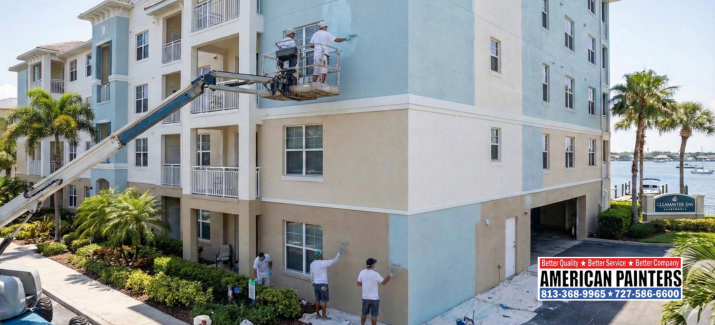
Furthermore, multi-story apartment complexes require specialized access equipment, such as aerial boom lifts, scaffolding, and swing stages, operated by OSHA-certified professionals to safely handle extreme height requirements.
Protecting Indoor Air Quality
Using low-VOC (Volatile Organic Compound) or zero-VOC commercial-grade paint is a strict requirement for multi-family units. In densely populated buildings, strong chemical odors from traditional paints can easily be drawn into shared HVAC systems, entering living spaces through vents or open windows.
Utilizing advanced low-VOC coatings keeps the indoor air quality safe for families, the elderly, and pets while the exterior work progresses efficiently.
Streamlined Tenant Communication
A strategic approach also involves seamless communication. Experienced commercial painters provide property managers with detailed phasing maps, showing exactly which buildings or sections will be painted on specific days.
This allows management to properly orchestrate parking lot closures, balcony clear-outs, and safe entry points without causing chaos for the residents.
The American Painters Technical Deep-Dive: The Dew Point Trap
One of the most critical factors in coastal Florida painting is understanding the micro-climate of the building’s surface.
Many inexperienced Florida contractors make the fatal error of beginning to spray paint right at sunrise in an attempt to beat the brutal afternoon heat. This is a catastrophic mistake that causes hundreds of premature coating failures in Pinellas County every single year.
Clearwater’s high overnight humidity creates a thin, often entirely invisible layer of condensation (moisture) on the building’s exterior surfaces in the early morning hours.
If a painting crew applies acrylic or elastomeric paint before the substrate (wall) temperature is at least 5 degrees Fahrenheit above the dew point, they trigger a chemical failure known as latent surfactant leaching.
This phenomenon occurs when the water-soluble ingredients within the paint formula are trapped by the underlying moisture, preventing the paint film from bonding correctly to the primer or stucco.
The result? Microscopic blistering, sticky or “weeping” walls, and a finish that begins to peel away within just one or two years.
At American Painters, we do not rely on guesswork. Our crews use specialized handheld infrared thermometers and digital psychrometers to continuously verify the surface temperature of the wall and the ambient humidity before the first drop of paint ever hits the stucco.
Waiting for the “Dew Point Gap” to clear is a non-negotiable technical step. It is the only way to scientifically guarantee that the coating cures properly and reaches its maximum manufacturer-rated service life.
Comprehensive Steps for a Long-Lasting Multi-Family Finish
Executing a flawless multi-building paint project requires a militant adherence to surface preparation and application standards. Here is the proven methodology required to protect Clearwater apartments:
- Salt Remediation and Deep Cleaning -Coastal properties are constantly bombarded by wind-driven salt spray. High-pressure washing (often utilizing specialized neutralizing detergents) is used to thoroughly strip away these salt crystals. If left unwashed, salt acts as a corrosive barrier between the wall and the new paint, preventing adhesion and accelerating coating failure.
- Stucco and Masonry Repair – Before a brush is lifted, the building’s envelope must be structurally sound. Our teams meticulously inspect exterior walls to identify spalling concrete, rust stains from exposed rebar, and spiderweb cracking. We use premium elastomeric patching compounds to fill and seal these hairline cracks, restoring the watertight integrity of the building.
- Application of Bonding Primers – Chalky or porous stucco requires a high-quality masonry primer or sealer. This synthetic resin base coat penetrates deep into the porous concrete, binding loose chalky residue and creating a uniform, highly adhesive surface for the topcoat to grip onto.
- Targeting Specific Mil Thickness – We do not just “paint” walls; we apply a protective membrane. During application, our quality control supervisors utilize wet film thickness (WFT) gauges to monitor the paint being sprayed. This ensures we achieve the exact “mil thickness” (measurement of thickness) required by the paint manufacturer to honor their waterproofing warranties.
- Final Walkthrough and Quality Assurance – Upon completion of a building phase, a dedicated project manager conducts a rigorous visual and tactile inspection alongside the property manager to ensure crisp lines, complete coverage, and an immaculate clean-up of the grounds.
Selecting the Right Aesthetics for Clearwater Properties
Beyond protection, exterior painting is a massive rebranding opportunity for an apartment community. Clearwater’s heavy sunshine dictates specific color strategies. Dark colors absorb massive amounts of UV radiation and heat, which not only drives up indoor cooling costs but also causes the paint to fade and chalk rapidly.
Current trends for Florida multi-family properties favor high-LRV (Light Reflectance Value) colors. Soft coastal whites, warm sandy greiges, and muted tropical accents (like sage greens or dusty navy blues on architectural trim) are highly popular.
These lighter, heat-reflective palettes keep the building cooler, resist fading, and give the property a modernized, resort-style aesthetic that attracts premium renters.
Budgeting and ROI for HOAs and Property Owners
For HOA boards and property investors, a multi-building paint project is a major capital expenditure. However, when executed correctly, investing in a professional exterior update offers a highly measurable return on investment (ROI).
First, curb appeal directly impacts revenue. A freshly painted, modernized apartment complex can increase overall property valuation by 5% to 7%. It allows property managers to justify higher rental rates, attract higher-quality tenants, and significantly reduce unit vacancy times.
More importantly, professional exterior coatings act as preventative maintenance. Paint is the skin of the building. By sealing the porous stucco, these coatings stop the disastrous cycle of water penetration, concrete spalling, structural wood rot, and internal mold growth.
When reviewing bids and calculating the painting cost per square foot, HOA boards must look at long-term protection rather than just the initial bottom-line price. A cheaper bid from a contractor who skips moisture testing, waters down their paint, or uses low-build materials will inevitably lead to a total repaint twice as fast.
Investing in commercial-grade materials, proper timing, and rigorous preparation provides the absolute best exterior maintenance ROI for a community’s reserve fund.
Frequently Asked Questions (FAQs)
How often should a Clearwater apartment building be painted?
Most coastal apartment buildings in Clearwater, Florida, require professional exterior painting every 5 to 7 years.
The intense combination of ocean salt air, daily high humidity, and extreme UV exposure degrades protective paint barriers much faster than in inland regions, making timely repainting essential to prevent water leaks.
Does the HOA or the individual owner pay for exterior condo painting?
In managed multi-family properties, the HOA generally pays for exterior building painting using the community’s reserve fund. The exterior structure is considered “common property.”
However, if you own a single-family home within an HOA-managed community, you are usually responsible for funding your own painting while strictly adhering to the board’s approved color palettes.
What is the best time of year to schedule large painting projects in Florida?
The optimal time for exterior multi-family painting in Florida is during the dry season, from November through April.
During these months, lower humidity levels and a lack of daily afternoon thunderstorms allow coatings to cure correctly and keep large-scale projects on a strict, uninterrupted timeline.
What is elastomeric paint and why is it used on apartments?
Elastomeric paint is an advanced, high-build, flexible liquid coating. Unlike standard acrylic paint, it applies up to ten times thicker and has elastic properties.
It is specifically used on stucco apartment buildings because it stretches to bridge hairline cracks as the building shifts, blocking wind-driven rain while remaining breathable.
How do professional painters minimize disruption for apartment tenants?
Professional commercial painters minimize disruption by providing 48-hour advanced written notices to all residents before work begins on their specific building.
Contractors use noise-reduced equipment, establish clearly marked pedestrian safety corridors, and coordinate closely with management to ensure residents can access their units and vehicles without interference or safety hazards.
Thinking about painting your multi-family community or commercial property? Proper maintenance requires commercial expertise and an understanding of Florida’s harsh climate.
Get a free, comprehensive, and no-pressure estimate from Clearwater’s trusted commercial painters.
Contact American Painters today to safeguard your structures and protect your community investment.

