


Managing Commercial Interior and Exterior Painting in Florida
Key Takeaways
- Defend Against Florida’s Climate: Intense UV exposure, constant humidity, and salt air rapidly degrade commercial paint, leading to chalking, cracking, and fading. Lighter, UV-reflective colors and flexible coatings (like elastomeric paint) extend lifespan.
- Prep Work Dictates Success: Eighty percent of a paint job’s longevity relies on thorough surface preparation. Skipping pressure washing, scraping, or concrete/stucco substrate repair triggers premature peeling and costly water intrusion.
- Optimize Interior Air Quality: Utilizing low-VOC commercial paints protects indoor air quality and eliminates harsh chemical odors, allowing high-traffic common areas to remain safely operational during a refresh.
- Minimize Business Disruption: Property managers should look for strategic contractor workflows, such as off-hours scheduling (nights/weekends), sectioned job zones, and fast-drying materials, to prevent costly operational downtime.
- Vet with a Strict Checklist: Protect your property budget by demanding a comprehensive contract that explicitly details commercial licensing, $1M/$2M liability insurance, OSHA safety protocols, precise material brands, and a clear labor warranty.
_________________________________________________________________________________________________________
Managing a commercial property in Florida comes with unique weather challenges. Heavy rain, intense sun, and salt air damage building surfaces quickly. This commercial property painting guide helps you protect your valuable asset.
You will learn how to choose the right paint colors, manage interior painting, and plan commercial exterior painting projects without disrupting your daily business operations.
What Affects the Commercial Paint Lifespan in Florida?
Florida weather reduces the average commercial paint lifespan. High UV radiation breaks down the chemical bonds in paint, causing colors to fade, chalk, and crack. Constant humidity and salt air also cause coatings to peel away from stucco and concrete surfaces.
To maintain commercial coating durability, your building needs thick, flexible finishes. One example is elastomeric paint. This is a thick, stretchy coating that bridges tiny cracks in stucco and keeps water out. Using quality paint helps you avoid frequent repainting costs over the long term.
Choosing the right paint colors also affects how well your exterior painting holds up. Dark colors absorb more heat from the sun. This heat accelerates the breakdown of the paint film. Light colors reflect UV rays and keep the building cooler, extending the life of your fresh coat of paint.
Why Is Prep Work Key for Commercial Exterior Painting?
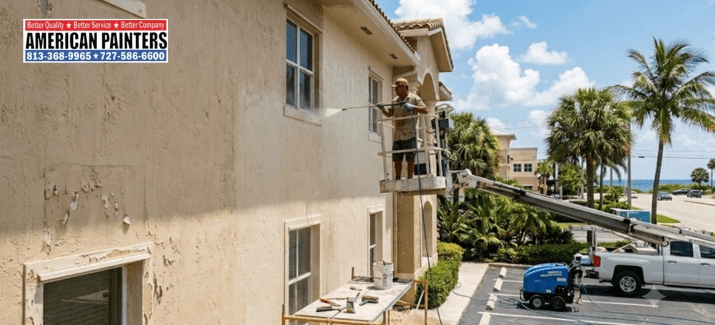
Prep work determines eighty percent of a paint job’s success. Skipping this step causes new paint to peel off within months. When painting a commercial building, the surface must be perfectly clean and stable.
Proper exterior prep work involves several key actions:
- Pressure Washing: Teams must pressure wash surfaces to remove dirt, chalk, mold, and loose debris.
- Exterior Building Substrate Repair: Workers must patch cracks in stucco or concrete before applying any paint.
- Scraping and Sanding: Technicians scrape away old, flaking paint to create a smooth surface.
- Sealing and Priming: Special primers lock down chalky surfaces so the new coating sticks firmly.
Ignoring substrate problems leads to water intrusion. Water gets behind the paint layer and creates bubbles. This ruins your investment and creates costly repair bills later.
How Can You Plan for Commercial Interior Painting?
Interior painting in commercial buildings focuses on durability and occupant comfort. Common commercial spaces like lobbies, hallways, and breakrooms need scrubbable paints. These areas face constant traffic, scuffs, and cleaning chemicals.
Your facility manager painting maintenance plan should include low-VOC commercial paint options. VOC stands for volatile organic compounds.
These are chemicals that release strong odors and harmful gases into the indoor air. Low-VOC choices protect indoor air quality during painting projects. This allows your business to keep operating safely without bothering employees or customers.
High-quality interior paint also resists stains and fading from indoor lighting. Selecting a professional commercial painting service guarantees clean lines and minimal mess during application.
How Do You Keep Your Project on Schedule?
Minimizing commercial painting disruption requires careful planning. A busy commercial property cannot afford long shutdowns. You need a clear timeline before the project begins.
A professional painting contractor minimizes disruptions by using specific strategies:
- Off-Hours Scheduling: Painting teams can work nights or weekends when the building is empty.
- Sectioned Workflow: Painters work in one specific zone at a time, keeping the rest of the building open.
- Fast-Drying Products: Advanced paints dry quickly, allowing rooms to return to service in hours.
Clear communication with your tenants or staff is also important. Let them know when specific areas will be closed. This keeps everyone safe and keeps your business running smoothly.
What Is the Ultimate Commercial Painting Contr=actor Checklist?
Choosing the right painting contractor protects your budget. Use this commercial painting contractor checklist when comparing bids for your commercial property.
- Licensing and Insurance: Check for active commercial liability insurance and worker’s compensation policies.
- Detailed Written Estimates: The bid must list the exact brands and lines of quality paint they plan to use.
- Defined Prep Work Steps: The contract should explicitly state how they will remove dirt and repair cracks.
- Project Timeline: Look for clear start and end dates, including daily working hours.
- Safety Protocols: The team must follow OSHA guidelines to protect workers and property visitors.
- Written Warranty: Ask for a clear warranty that covers both the paint materials and the labor.
Frequently Asked Questions
How often should a commercial building be painted in Florida?
Most commercial buildings in Florida need exterior painting every five to seven years. Properties close to the beach may need a fresh coat of paint sooner due to salt spray. Regular facility manager painting maintenance checks can catch minor damage before it spreads.
What are the benefits of low-VOC commercial paint options?
Low-VOC paints improve indoor air quality and eliminate harsh chemical odors. This is highly useful for interior painting in hospitals, schools, and offices. It allows people to use the commercial spaces immediately after the paint dries.
Why is exterior building substrate repair necessary before painting?
Painting over cracked stucco traps moisture inside the building walls. This moisture causes the paint to bubble and peel away. Repairing the substrate first ensures the new commercial coating durability lasts for years.
How do painters remove dirt without damaging stucco?
Professional commercial painters use regulated pressure washing with specific cleaning solutions. This safely removes dirt, mold, and mildew without eroding the delicate stucco texture.
Keeping Your Commercial Property in Excellent Condition
Protecting your commercial building requires expert planning and execution. Regular maintenance saves money over the long term and keeps your property looking professional.
If you need reliable commercial painting services that withstand the tough Florida climate, American Painters provides high-quality solutions.
Give us a call for an estimate!

